Hairise Provides Modular Belt, Slat Conveyor Chain And Automatic Conveyor System Solutions Since 2004.
Language
Conveyors, the cornerstone of effective operations, have revolutionized material handling in contemporary industries. These systems provide smooth product transportation from manufacturing lines to logistic hubs, increasing efficiency & security. Chain & belt conveyors stand out amongst the wide variety of conveyor systems that offer fundamental solutions tailored to meet a range of industrial applications. They play a crucial part in influencing the effectiveness and success of entirety operations, going beyond straightforward transportation. The crucial question is Why choosing a suitable conveyor system impacts operational efficiency? We have to look into their designs, uses, & distinctive qualities in order to offer an answer.
Chain conveyors are powerful systems made to withstand a variety of demanding applications. These conveyors move goods across different distances using interlinked chains. Their design, which emphasizes longevity & load-bearing capability first, is their primary strength. chain conveyor systems, that are designed for tasks requiring a lot of strength, work well in situations when other systems would not.
Chain conveyor components are meticulously constructed to last. The core of their construction includes reinforced frames, sprockets, & chains made of premium steel or alloy. These parts are made to resist tough industrial environments, high temperatures, & abrasive materials. Belt chain conveyor provide consistent performance in a variety of settings, notably mining sites and car assembly lines.
In areas that need handling big materials, chain driven conveyors are necessary. Car bodies are easily moved along production lines in the automobile industry. They are utilized by the timber sector to move big logs and wood, as well as mining operations to move bulk minerals like coal and ore.
There is no denying the benefits of chain conveyors. They have significance in difficult circumstances because of their capacity for handling heavy loads & abrasive materials. But there is a price for these advantages. Relative to other systems, chain conveyor systems generate more noise, need more regular maintenance, and use a lot more energy.
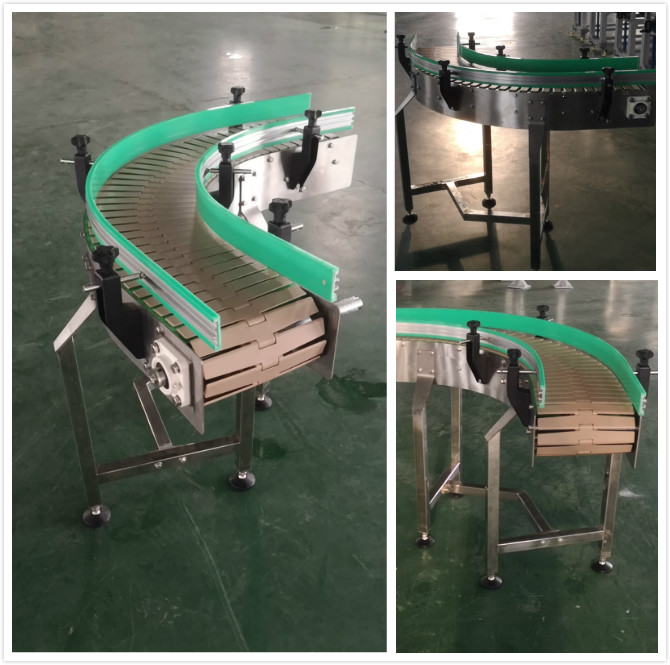
The pinnacle of material handling flexibility can be seen by belt conveyors. Pulleys drive a continuous loop of material, like rubber, cloth, or modular plastic, in these systems. Belt conveyors are designed for lightweight, fast transportation and are most appropriate for uses where accuracy and productivity are critical.
Belt conveyors are architecturally designed with pulleys, tensioning systems, & belts made of various materials with particular uses. These conveyors offer unparalleled versatility, whether they are employed as a heat-resistant belt for food processing or as a high-friction surface for packing lines.
Belt conveyors serve a vital role in industries where speed and precision are valued highly. Packaging lines rely upon them for smooth product handling, whereas food processing facilities employ them for transporting perishable commodities. They are additionally essential to airport baggage systems, that guarantee the quick and efficient transfer of bags.
Belt conveyors excel at running silently & smoothly. For numerous industries, they are an ecologically favorable option because of its decreased energy consumption. They operate within certain limits, though. Conveyor belt system require cautious handling & routine inspections since they are susceptible to deteriorating when exposed to heavy or sharp items.
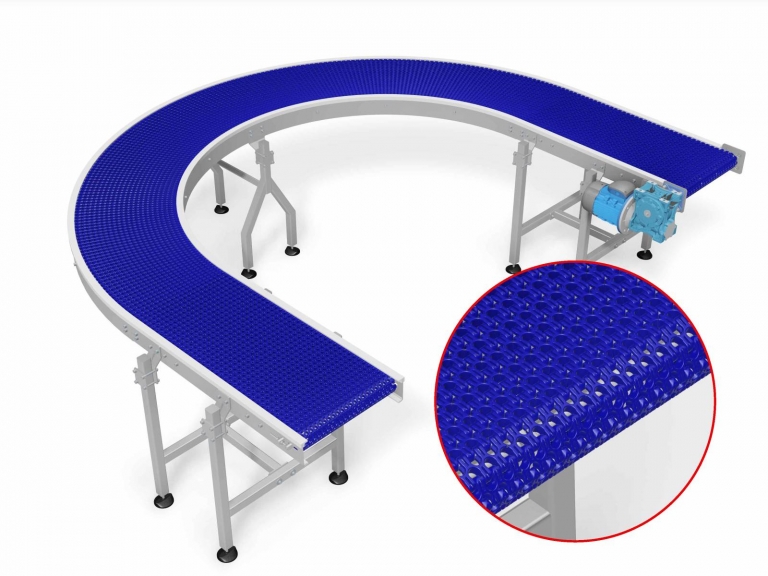
● Load-Bearing Capacity: Specifically, belt chain conveyors are the most common choice for heavy-duty applications. They are capable of supporting enormous loads because of their robust structure. On the other hand, conveyor belt system work best in applications like packaging or food processing that call for accuracy & precision.
● Operational Costs and Maintenance: Higher maintenance costs result from the need for frequent lubrication & part replacements for chain conveyors. On the other hand, belt conveyors minimize operational downtime as they are easier and more quickly to replace.
● Durability and Performance: Chain driven conveyors are particularly capable of withstanding aggressive substances and extremely high temperatures. Conversely, belt conveyors operate better in hygienic or cleanroom situations where accuracy and cleanliness are crucial.
● Speed and Efficiency: Belt conveyors offer seamless movement of lightweight goods at an unmatched pace. In many situations, their precision & agility surpass the capabilities of chain conveyor systems.
● Noise and Environmental Impact: Due to their interconnected systems & need for lubrication, belt chain conveyors are by nature noisier, that affects their environmental effect. Belt conveyors, on the opposite hand, are an environmentally friendly option since they run smoothly and require less maintenance.
The selection between belt & chain conveyors will hinge on how well system capabilities match the needs of operation. Durability, affordability, & throughput are important considerations. Chain driven conveyors are frequently employed by manufacturing companies due to their robustness as well as ability to move large loads. Contrary, conveyor belt systems are favored by the warehouse & logistics industries as to their rapid and silenced operations.
Since they provide the best of both worlds, hybrid configurations are growing more and more popular. Combining belt & chain conveyor systems enables companies to create adaptable substance handling solutions which can be adjusted to meet a variety of requirements. In varying market situations, this tactical strategy guarantees long-term efficiency & flexibility.
Conveyor system carbon footprints have been studied as industry work to lessen the impact they have on the environment. Sustainable materials & energy-efficient designs are right now paving the way in innovation.
Conveyor technology is being transformed by smart monitoring systems that offer predictive maintenance & real-time diagnostics. In addition, a potential trend in conveyor developing is the use of materials that are biodegradable and recyclable. These advancements are appealing choices for innovative companies since they not just improve sustainability additionally lower lifecycle costs.
When selecting a conveyor system, its ecological sustainability is increasingly becoming a deciding component. In order to ensure future savings in costs & environmental advantages, businesses have given priority to systems featuring less energy usage and optimum performance.
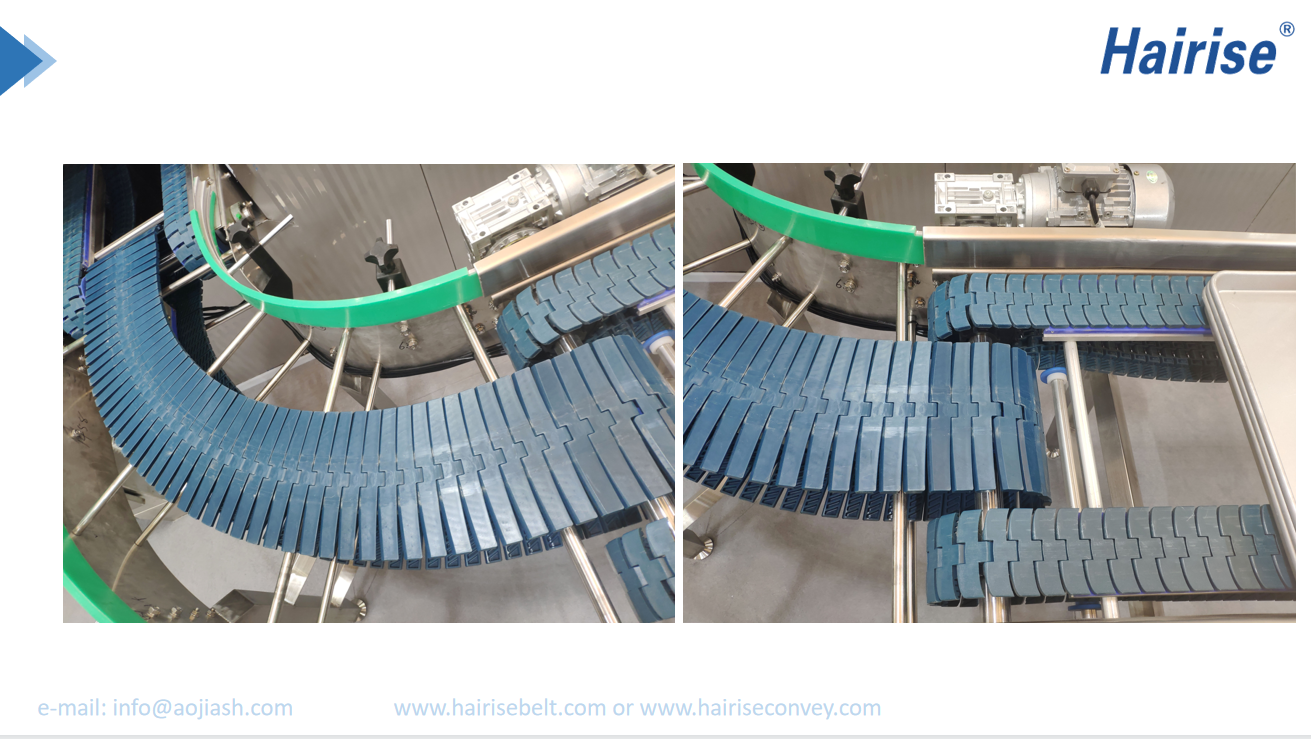
The differences between belt & chain conveyors emphasize their distinct functions in manufacturing processes. Belt conveyors provide effectiveness & flexibility for light-duty operations, while chain conveyors perform best in heavy-duty applications. But there's not a one-size-fits-all answer. For the best conveyor system, businesses have to evaluate their operating demands, taking goals for sustainability, maintenance requirements, & load capacity into account. Businesses can achieve previously unattainable levels of material handling achievement and effectiveness by coordinating their decisions with long-term goals. So find the conveyor systems you want at Hairise, whether it is Modular Belt Conveyor or others.
LEAVE A MESSAGE
As a automation Conveyors Manufacturer, Plus Modular Belts and Components, Hairise is your right reliable and winning choice.

As a plastic conveyor belt manufacturer & modular conveyor belt supplier, Hairise is your right reliable and winning choice.

