Hairise Provides Modular Belt, Slat Conveyor Chain And Automatic Conveyor System Solutions Since 2004.
Language
Hairise Provides Modular Belt, Slat Conveyor Chain And Automatic Conveyor System Solutions Since 2004.
Conveyor belts are a big help in all kinds of places: factories, food plants, warehouses and more. They move stuff like snacks, bottles, boxes and even big metal parts. This makes work faster or easier and safer. However, there is one thing that you may not be aware of and that is all conveyor systems belts are not alike.
The most popular options are the stainless steel conveyor belts and the plastic conveyor belts. They all move the stuff but they are designed differently and they better work differently. Picking the right one isn’t about how it looks. It’s about what you need the belt to do. Is your product hot or cold? Heavy or light? Do you care more about cost or cleanliness? These questions matter!
This article will compare stainless steel vs. plastic conveyor belts, their features, where they work best and how to pick the one that fits your business. Read on to learn more.
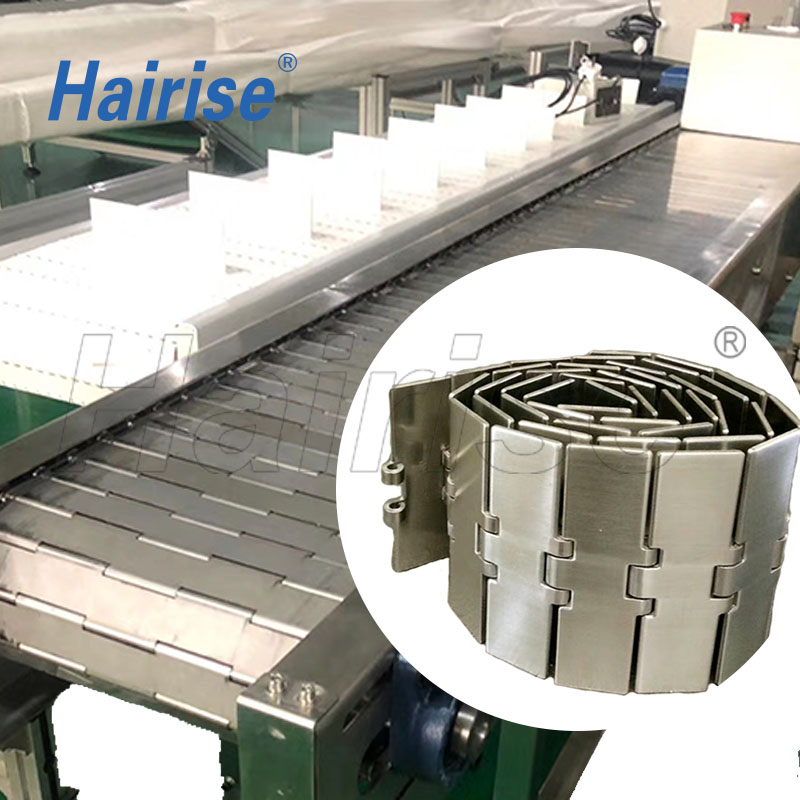
SS conveyor belts are super strong. They’re made to handle heavy stuff and last a long time, even in tough places.
● Strong: These belts handle heavy loads with ease. Need to move hot pans, metal parts, or big boxes? No sweat!
● Withstands the heat: The stainless steel is a high-temperature lover. Therefore, it will not flinch when you are baking and cooking and when using heat.
● No rust: Stainless steel is also durable because it does not rust or corrode, making it ideal in wet or steamy spaces.
● Super hygienic: Suitable for food and pharma industries since it is simple to make squeaky clean.
● Bakeries
● Meat processing plants
● Pharmaceuticals
● Heavy-duty factories
But wait, there’s a catch: These belts are somewhat rigid. They are not good with flexibility. They are not too economical. They cost you more but last longer. It is a trade-off worth considering.
Now let’s talk about the cool, flexible, and lightweight champ, plastic belting. Here's why people love them:
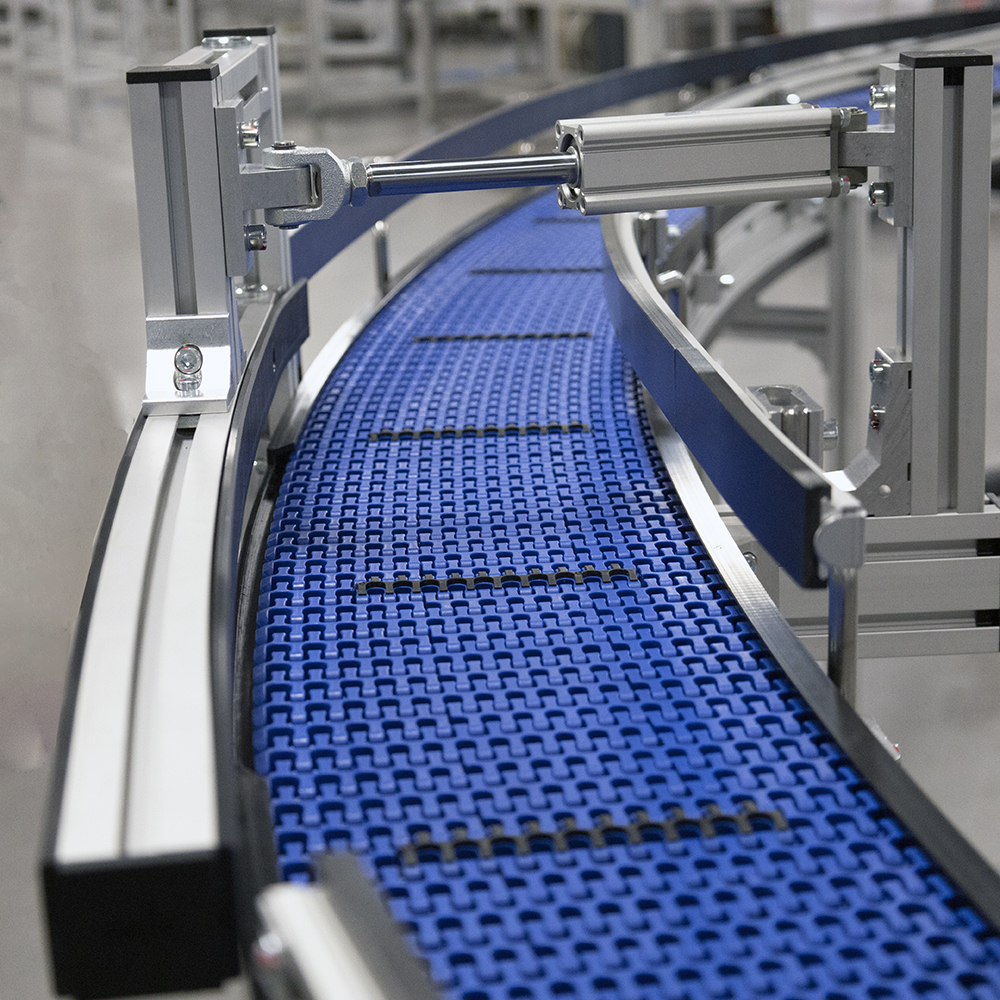
● Bend it like a belt: These belts are super flexible, great for twists, turns, and tight spaces.
● Lightweight but tough: Don't let the word plastic fool you. These belts can take a beating.
● Easy on the wallet: Less costly than steel, both to buy and to fix.
● Color-coded options: You can choose colors to match safety codes or sort materials easily.
● Snap-together design: Plastic chain belts often come in modular styles, making repairs a piece of cake.
● Bottling plants
● Packaging lines
● Snack factories
● Warehouses with lots of curves and elevation changes
Downsides? They’re not always best in high-heat spots. And while they’re easy to clean, they may not meet the super-strict hygiene rules of the pharma world without extra care.
Alright, now let’s do some head-to-head comparison. Who comes out on top? Let’s find out!
● Stainless conveyor belts are built like tanks. They are able to hold hot or heavy and sharp objects. Great for nonstop work and rough environments.
● Plastic conveyor belt systems are all about bending and twisting and sliding around the corner. They are really lightweight and ideal for complex paths, but they are not the best choice when dealing with very heavy loads.
Winner: Tie! If you need power, go with steel. If you need movement, plastic is your pal.
● Steel belts are super easy to clean. A hot rinse or chemical wash and boom, they’re ready to go. No soaking up grease or bacteria. That’s why they’re a top pick in food and pharma industries.
● Plastic belts, especially the plastic chain types, can be cleaned too. But dirt can get trapped in the tiny joints and corners. You’ll need a little more elbow grease.
Winner: Stainless steel conveyor belts take the lead for hygiene and easier deep cleaning.
● Steel belts are a bigger investment upfront. But they last long and don’t need as many repairs. In hot, wet, or heavy-load places, they pay for themselves over time.
● Plastic belts are lighter on the wallet. They’re cheap to buy, quick to fix, and easy to install. If you’re on a tight budget or just getting started, this is a solid choice.
Winner: Plastic conveyor belts for short-term savings and easy upkeep.
● Plastic may have earned a negative reputation, but a lot of plastic beltings are nowadays recycled and even recyclable again.
● Stainless steel can be completely recycled and is extremely tough and lasts for years, thus creating less waste compared to others.
Winner: Close one! But Steel conveyor belts take the win for long-term sustainability.

Now, which one is better, stainless steel conveyor belts or plastic conveyor belts? The fact is, it is not the answer that fits all. Both of them possess superpowers. SS conveyor belts are the choice to make when you require strength, hygiene and require heat resistance. However, they are not ideal in case of flexibility, cost-saving and easy customizability. These requirements are better met with plastic conveyor belt systems. Still unsure? Ask yourself:
● What’s my budget?
● What am I moving?
● Is hygiene a top priority?
● Do I need the belt to bend and twist?
Choosing the right belt is all about matching the belt to the job. Get the one that is good and it will keep things rolling like butter. Not sure which belt fits your job? Let Hairise help you choose the perfect match! Contact us now and get a free consultation to get a tailored conveyor solution to keep your business running smoothly and strong.
Question 1. Which industries typically use stainless steel conveyor belts?
Answer: Stainless steel conveyor belts are adored by industries such as the food processing industry, meatpacking industry, pharmaceutical industry and baking industry. They are powerful or washable and are heat resistant.
Question 2. Are plastic modular belts suitable for high-temperature environments?
Answer: Not really. While plastic conveyor belts can handle warm conditions, they aren’t built for extreme heat. In ovens or cooking zones, they might warp or melt. Always check the max temperature rating before choosing!
Question 3. How do cleaning requirements differ?
Answer: Stainless conveyor belts are nonporous and smooth; simply spray and go. Plastic belting, in particular those having plastic chain links may require some special effort to clean inside joints and tight areas.
Question 4. Can both belt types be customized?
Answer: Absolutely! You can tweak both. Add side guards, go for curved setups, or choose special materials. Plastic conveyor belts often have modular designs for quick swaps, while steel conveyor belts can be engineered for complex systems.
LEAVE A MESSAGE
As a automation Conveyors Manufacturer, Plus Modular Belts and Components, Hairise is your right reliable and winning choice.

As a plastic conveyor belt manufacturer & modular conveyor belt supplier, Hairise is your right reliable and winning choice.