Hairise Provides Modular Belt, Slat Conveyor Chain And Automatic Conveyor System Solutions Since 2004.
Language
Hairise Provides Modular Belt, Slat Conveyor Chain And Automatic Conveyor System Solutions Since 2004.
Have you ever wondered how some fulfillment centers stay on top of huge order waves without breaking a sweat? The answer often lies in smart equipment, not just extra staff. As e-commerce booms, warehouses face sky-high order totals, tight shipping deadlines, and packed floor plans.
You might see rows of fixed conveyors that feel stuck in place when demand shifts. Modular chain conveyors offer a fresh way to work with change instead of fighting it. They let you build, tweak, or shrink your conveyor layout on the fly. In this article, we’ll explore the hurdles busy fulfillment centers face and show how modular conveyor systems can turn chaos intoa smooth, reliable flow.
Modular conveyors are conveyor lines built from individual modules that snap together like building blocks. Each module carries a small belt, roller, or chain segment. You can link them in straight runs, curves, or merges. When you need to swap a section, you unlock a few clips and lift it out. Want a longer run? You click on extra modules. Need to change direction?
You swap in a curved segment. This DIY style differs from old‐school fixed conveyors, which sit bolted to the floor in one layout. Modular belt conveyor let you adapt in minutes instead of weeks. You gain real agility to meet shifting orders, new product lines, or seasonal peaks without tearing up your floor.
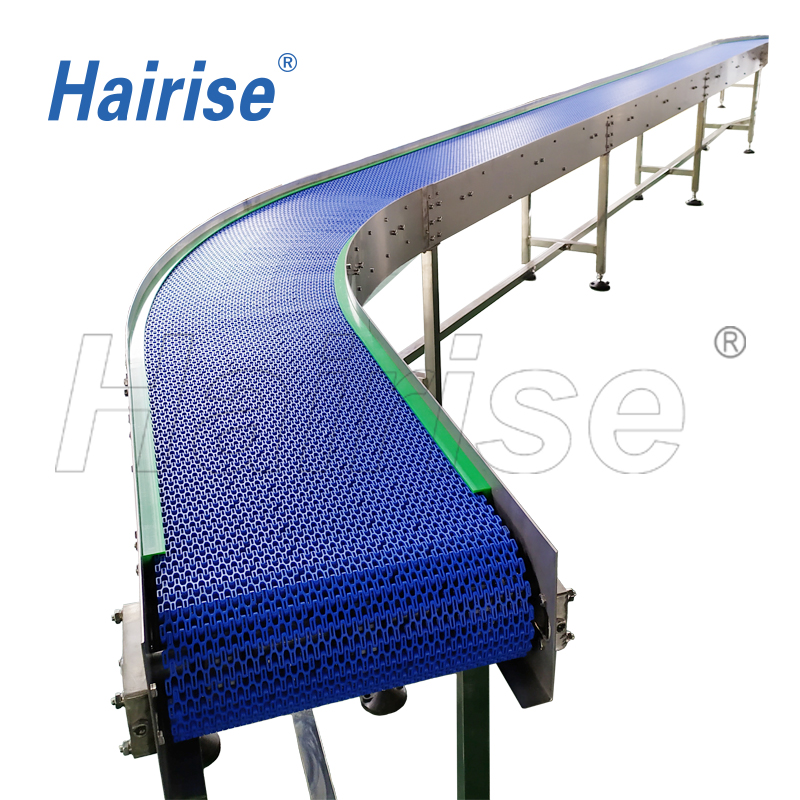
Modular conveyors give you the freedom to change course quickly. Let’s say a new toy becomes a best seller overnight. You can reroute your conveyor path to feed more packages into the packing station for that toy. You clip out a straight run, swap in a merge point, and tie in three new lines.
You make that change in under an hour, not days. Your team keeps working while you shift the flow. With fixed conveyors, you’d call in installers and pause operations. That downtime costs money and stress. Modular belts make it easy to follow demand instead of fighting it.
Order volumes rarely stay the same all year. Black Friday and the winter holidays bring a tidal wave of parcels. A fulfillment center might handle ten times its usual volume. If you rely on fixed conveyors, you either run slow lines or rent extra space with new equipment.
With modular belt conveyor, you slide in extra modules only when you need them. You may boost capacity by 30 percent for two months, then remove the extras when spring arrives. That plug-and-play scaling helps you match your footprint to your workload. You avoid paying for idle lines, and you stay lean when times are quieter.
Downtime costs real money in a fast-paced warehouse. A broken conveyor belt can bring everything to a halt. Modular conveyor systems cut repair time to minutes instead of hours. If a section fails, you unclip it, swap in a spare module, and clip it back in.
Your belt stays alive while technicians fix the old module off to the side. This design means you carry fewer spare parts and need less specialist training. Your maintenance team spends their time fixing one small piece, not rebuilding an entire conveyor. Keeping lines moving keeps orders moving out the door.
Buying a full fixed system means you pay for every foot of belt, every curve, and every merge, even if you never use them. plastic modular conveyor let you start small and grow bit by bit. You invest in the core path you need today.
When you expand, you add only what you use. Reusing modules for different seasons or product lines spreads out the cost. You avoid major overhauls every few years. Over a five-year span, you might spend 40 percent less overall on conveyor modules versus fixed conveyors and still enjoy more dynamic layouts.
Automation lies at the heart of modern fulfilment centers. Robotic pickers, barcode scanners, and automated sorters all rely on smooth conveyor integration. Modular conveyor system plug right into these smart systems. You clip on an automated scanner module, then link to a robotic arm station. When you reconfigure the path, the scanner moves with it.
You keep the automation intact. This keeps your workflow continuous and lets you experiment with new automated cells. You can pilot a robot in one bay, then move it to a higher-demand area in the next month. Your whole system grows smarter without major rewiring.

Modular belt conveyor bring big perks, but a little planning goes a long way.
● First, map out your available floor space and traffic patterns. You need room to swing modules into place. Measure aisles, column locations, and dock doors.
● Next, set a clear budget that covers core modules, spare parts, and any special curves or merges you’ll need. Don’t forget control panels and automation interfaces.
● You also want to think through integration with your warehouse management system. Will your software easily reroute orders along new paths? If not, work with your IT team early.
● Train your staff on simple clip-and-go maintenance so they can swap modules safely.
A short workshop will pay off when you cut downtime by half. Good planning ensures your modular system drives efficiency instead of creating bottlenecks.
As e-commerce keeps rising, fulfillment centers can’t stick with one-size-fits-all conveyors. Modular conveyor systems let you bend, grow, and repair your lines at will. You gain real flexibility to meet sudden surges, scale up for peak seasons, and keep maintenance quick and cheap. You spend wisely by reusing modules instead of buying new systems.
When you link conveyors to scanners, sorters, and robots, you unlock even more efficiency gains. If you manage a busy fulfilment center, give modular belt conveyors a close look. You’ll find they help you ride every wave of demand with ease, so you meet deadlines, tame floor space, and stay one step ahead of change.
LEAVE A MESSAGE
As a automation Conveyors Manufacturer, Plus Modular Belts and Components, Hairise is your right reliable and winning choice.

As a plastic conveyor belt manufacturer & modular conveyor belt supplier, Hairise is your right reliable and winning choice.